
Walking Thoughts: Is Language Really the Easy Way to Talk to Machines?
A note on interaction, AI, and why we may need to observe the space between entities

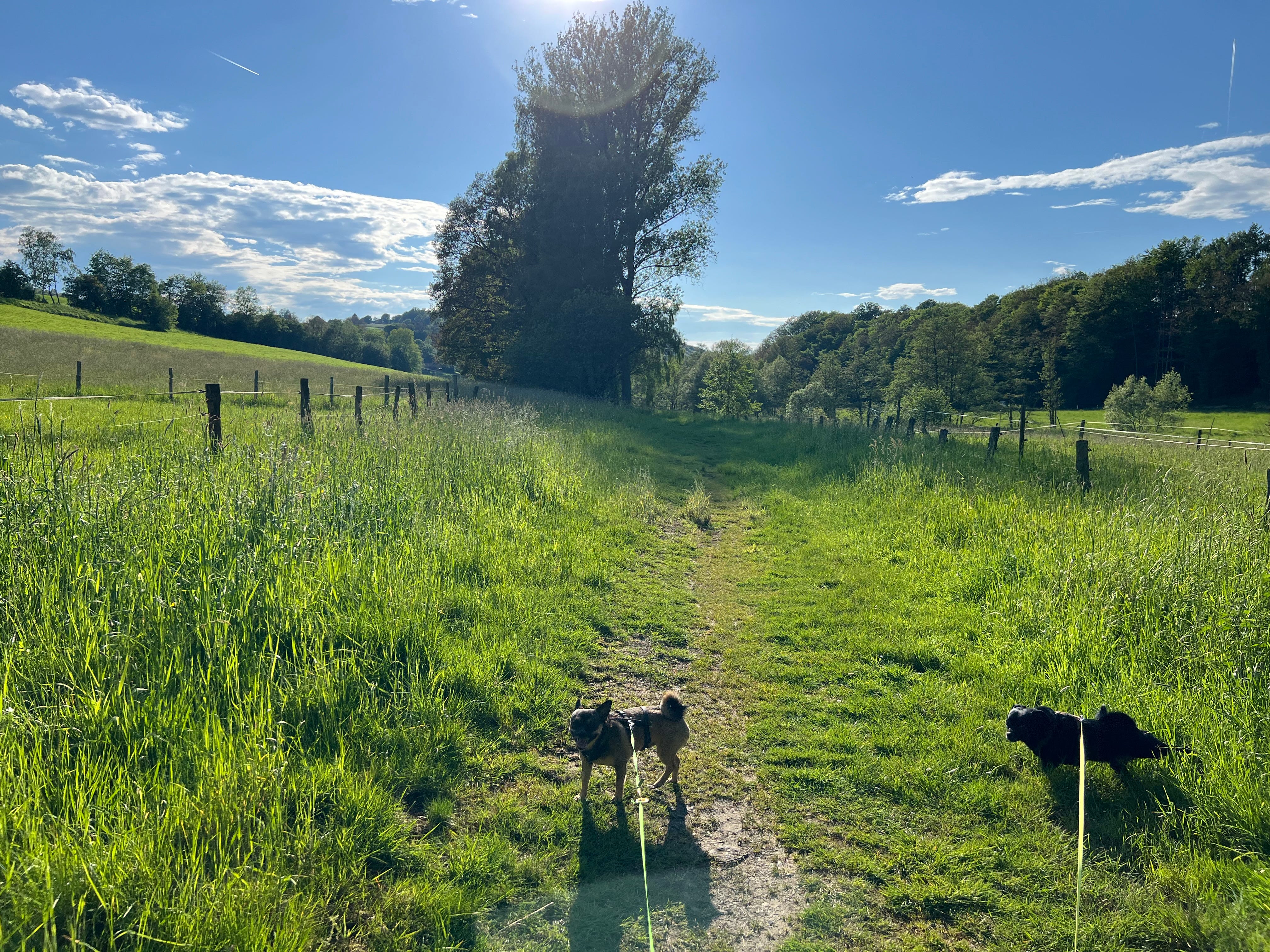
This text started while walking the dogs.
Not at my desk, nor in a meeting. Not while carefully planning an article.
Just walking and thinking. Getting perhaps more than a little annoyed, to be honest.
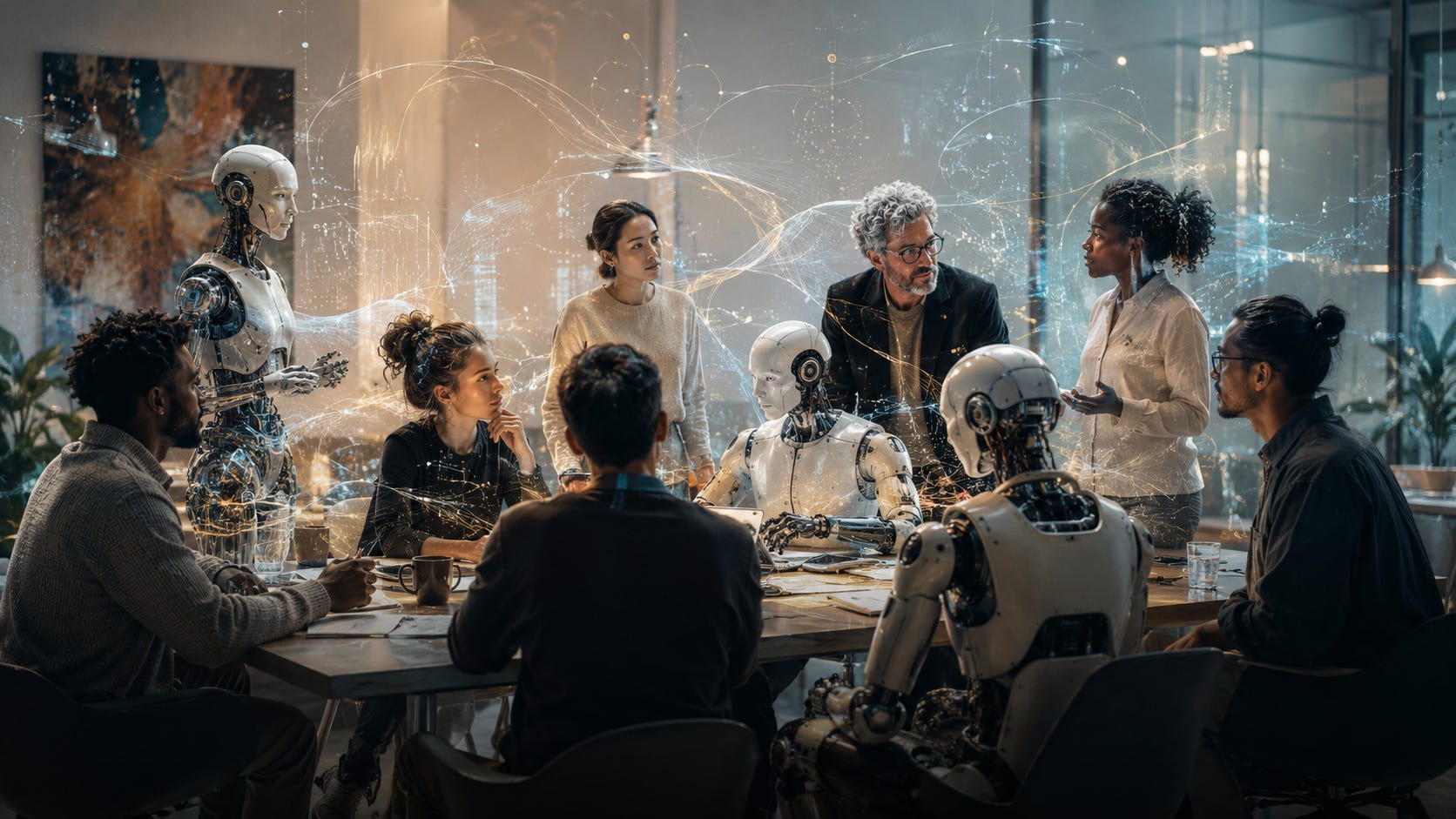
Language and machines
There is so much noise around artificial intelligence at the moment.
Open models or closed models, rules or no rules.
Freedom or control, hype or fear.
The next big model.
The next big risk.
The next big promise.
🤖
All of that matters, of course.
But sometimes I wonder whether we are looking at the wrong layer first.
Maybe the important question is not only what a model can do. Or what a human is willing to do. Maybe it is not only whether a machine is useful, dangerous, creative, biased, aligned, or too powerful.
Maybe one of the more basic questions is this:
What happens between entities when they interact?
Not only between humans.
Not only between humans and machines.
Not only between machines.
=> Between entities.
A human can be such an entity.
A machine can be such an entity.
An organization can sometimes behave like one.
A team can.
A technical system can.
Even an animal, a plant, a process, or an institution can influence its environment and other entities within it.
🤖
So perhaps an agent does not have to be mystical.
It does not have to be conscious - or human-like.
Maybe an agent is simply an entity that can affect other entities within an environment. Perhaps that sounds almost too simple.
But it changes the question – because whenever entities interact, they need signals.
💨
There are a lot of (informative) signals in our world:
Smoke signals. Morse code. Gestures.
Body language. Braille.
Sign language. Spoken language. Written language.
Formal languages. Prompts.
Sounds.
…
We often behave as if natural language were the easiest interface to machines.
I am not sure it is. I think it may only be the most familiar one. And familiar is not the same as simple.
🤖
Natural language is compressed, often ambiguous.
Context-heavy.
Socially loaded, full of assumptions.
A sentence can be grammatically correct and still fail.
A request can be clear for one person and unclear for another.
A message can be polite and still feel cold.
A question can look simple and still carry role, expectation, history, pressure, purpose and emotion.
And an idea can be fancy but completely lost its grounding.
🤖
Anyone who has worked in teaching, care, management, law, security, software development, consulting, public service, or family life knows this.
“Just say it clearly” is often not simple at all. Therefore we developed formal syntax.
And now we tell people: Just talk to the machine. That sounds wonderfully accessible. But it also hides a problem:
If language becomes the main interface to machines, then we are not removing complexity.
We are moving it into context, phrasing and structure.
Into grammar and tone.
Into missing background information, unspoken goals, too much noise.
Into the space between what is said and what is meant.
Into: which training data uses the model - and who owns it.
🤖
That definitely does not make language a bad interface.
It makes it very powerful - and maybe powerful things need observation before steering.
When two humans interact, we already know that misunderstandings are possible. We know that context matters. We know that words are not only words.
Communication theory has worked on this for a long time.
Watzlawick, Schulz von Thun, Habermas, Buber, Luhmann.
Different perspectives, different language.
Different traditions.
But all of them, in one way or another, point to something that is easy to forget:
Communication is not just transport!
Something happens between the participants. Let’s say: A temporary fragile shared space forms.
Where? What?
“I can’t see it,” some of you may say.
Fair enough.
🤖👤
But in my understanding:
It can open, it can stabilize.
It can drift.
It can break.
With AI, we often talk as if this were completely new.
I do not think it is.
What is new is the speed, the scale, the technical mediation.
The fact that systems can act again and again, connected to tools, data, rules, APIs, sensors, logs, workflows, moderation layers, security policies, other models, and organizational goals.
A chatbot answering one question is one thing - an autonomous system acting over time is another.
A robot in a home, a hospital, a school, a factory, a public service environment or a city does not only produce outputs - it participates in situations together with us humans.
It acts, reacts, influences – and it is influenced.
🤖👤
In such a setting, the interesting question is not only: Did the system complete the task?
The deeper question may be: Where is this entity within the interaction - in relation to others?
Is it still connected to the human context? Is it still in its role in a multi-agent setting?
Is it still inside a shared space?
Is it drifting away?
Is it becoming too narrow, too broad?
Too rigid or too helpful in the wrong direction?
And perhaps even more importantly: Can we notice this before something breaks?
This is where I think many AI discussions become too small.
We talk about outputs.
We talk about models.
We talk about rules.
We talk about access.
We talk about productivity.
All of that is necessary… but as said before:
from my personal perspective before steering comes observation. It seems somehow not logical at all to me to steer before observation. Nobody would have built a plane without observing birds… or a boat without observing objects in the water.
👀
We did it - but have we done enough?
Before real alignment comes the question: What exactly is moving?
If humans and machines interact over time, we need ways to observe the interaction itself. If we want to share environments with such systems, don’t we need to understand the interaction first?
Ok. Deep breath for most of us.
Observation… why?
It‘s simple: Not to control people nor to claim that machines are conscious.
Not to turn every conversation into surveillance.
But to understand whether a shared interaction space remains coherent.
Whether the participants still operate in a way that makes sense in relation to one another.
Whether the interaction remains stable enough to be useful, safe and understandable.
This matters for developers, for governance, for data protection officers and information security officers.
It matters for management.
It matters for teachers.
It matters for people who will never write code, but will still live and work with systems that act through language.
It matters for all of us.
And this is the part I keep circling back to: Maybe the real challenge is not that machines now speak - maybe the challenge is that we believe speaking is easy.
It is not.
Language is one of the oldest, most differentiated, most successful and most complex signal-based technologies we have. If we use it as a central interface to machines, we should not only ask what the machine answers. We should ask what kind of interaction is forming.
Does it hold?
Does it drift?
Does it remain understandable?
Does it allow the entities involved to stay oriented?
I am not writing this as a finished answer. It is more a note from a walk🌳🐕, a kind of “thought from the path”.
“Panta rhei”, as the Greeks might say. (“Everything flows.”)
Not as impressive output. And not the big money idea. But as a step to something grounded - and probably needed. And sometimes walking thoughts are the ones that notice where the ground begins to change. Some readers here know that I am currently working with a small team on a paper around these questions. And every day there are new questions…
The full technical work is not the point of a note. Not yet. Perhaps a logical question is not simply whether AI is useless or useful.
Maybe a question is:
How do we know when an interaction with AI becomes meaningful, stable and safe enough to continue? And how do we notice when it no longer is?
A note on authorship:
I write my own texts.
I still do use AI as a thinking and reflection partner, especially when structuring ideas, translating thoughts between German and English, and checking whether a line of reasoning remains understandable.
But I do not publish machine-generated articles as if they were my own thinking.
For me, that distinction matters. Especially when writing about interaction.
Thanks for reading
Anne